Who Really Owns Your Money? 2



In the first part of this series, we looked at a simple but uncomfortable reality: when someone else controls access to your money, ownership can disappear the moment the system comes under stress. From banks imposing capital controls to platforms freezing withdrawals, the pattern has repeated itself across countries and technologies. Self-custody emerged as a response to that reality, giving individuals direct control rather than relying on intermediaries to grant access.
But ownership alone does not fully explain why so many people have lost access to their savings. To understand that, we need to look more closely at how safety is designed, and what happens to it when systems are under pressure.
Trust was not a choice, it was a constraint
For most people across most of history, trusting financial institutions was not optional. It was a constraint. Saving, spending, and moving money required intermediaries, and there was no practical alternative. Participating in the financial system meant handing over control and accepting the risks that came with it.
Given the tools of the time, this was the best system available. Banks and financial institutions enabled trade, credit, and long-term saving at scale. For long stretches, the system functioned well enough that its weaknesses stayed out of sight.
The issue is not that trust-based systems never work. It is that they work until they don’t. Their safety depends on conditions remaining stable. When those conditions change, access to money can quickly become uncertain.
Why trust breaks down under pressure
Stress reveals how financial systems actually behave. Liquidity tightens. Rules change. Institutions respond to constraints rather than individual needs.
In these moments, access to money is often the first thing to be limited. Withdrawals are capped. Transfers are delayed. Accounts that appeared fully available days earlier become restricted without warning. For the saver affected, the explanation matters less than the outcome.
These breakdowns are rarely driven by intent. They are structural. When an institution controls access to funds, it also controls how that access changes under pressure. Promises give way to necessity.
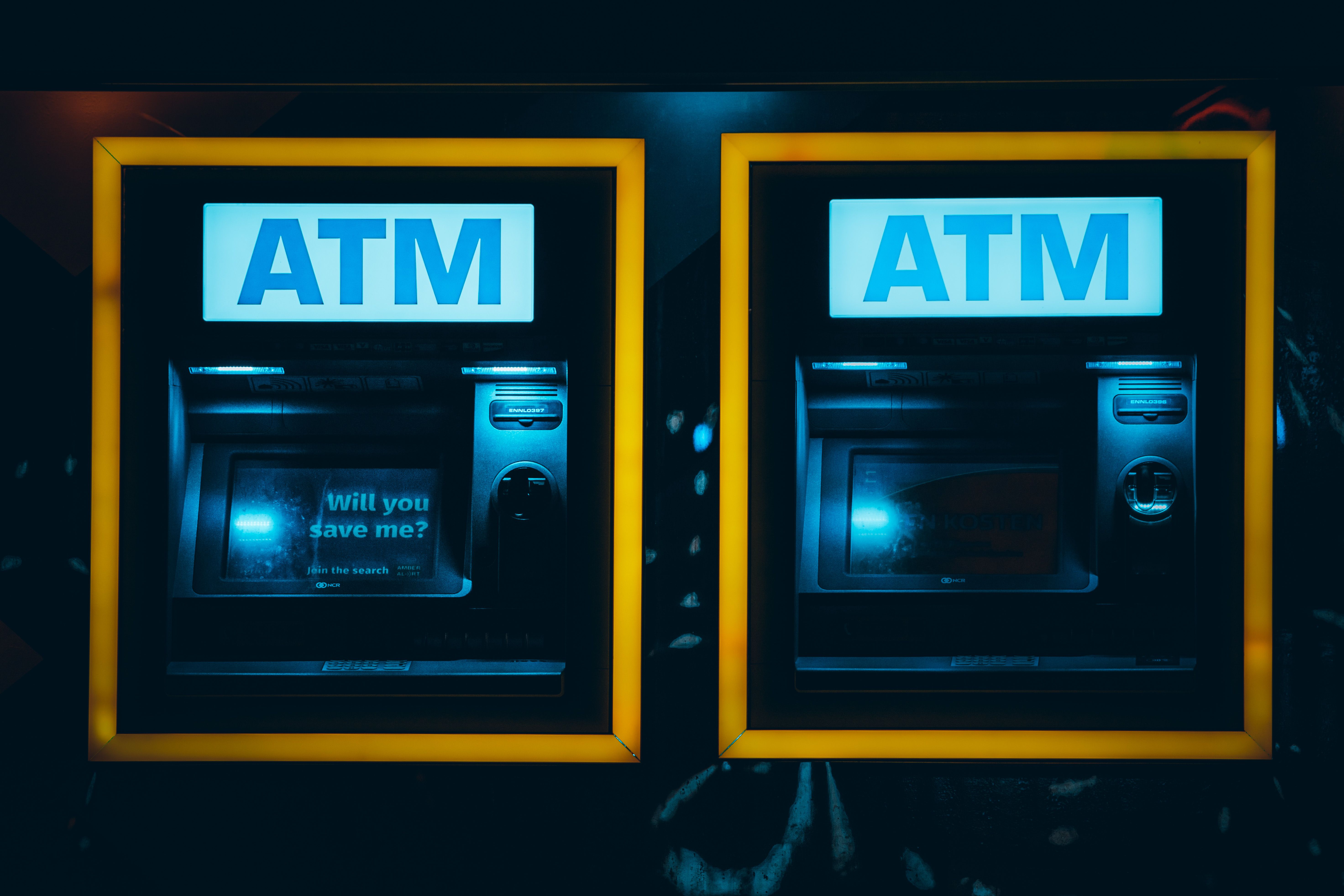
In March 2023, Silicon Valley Bank collapsed in a matter of days, leaving customers temporarily unable to access billions in deposits.
The limits of promises
Promises matter in normal conditions. Institutions outline safeguards, regulators set rules, and users are told their funds are protected.
Under stress, those promises meet their limits. Access is shaped by what the system can sustain, not by what it intends to do. There is a difference between saying funds will remain accessible and being unable to restrict access in the first place.
Safety that relies on favorable conditions is fragile. Safety that is enforced by design is not.
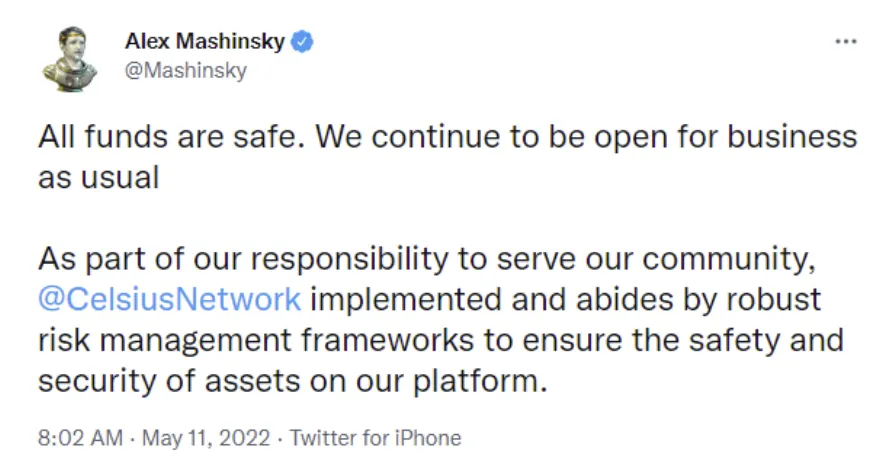
Public assurances from Celsius Founder & CEO in the weeks leading up to the platform freezing withdrawals in 2022.
What structural safety actually means
For a saver, safety is practical.
Who can move your money?
Who can stop you from accessing it?
Who can change the rules if something goes wrong?
In traditional systems, the answer is an intermediary. Your money sits under their control, subject to their constraints. When everything works normally, this is easy to ignore. When it doesn’t, that control becomes obvious.
Self-custody changes this arrangement. Your money is not held by a bank or platform on your behalf. It sits in a wallet you control directly. You do not need permission to access it, move it, or withdraw it. No intermediary can freeze it or delay it when conditions deteriorate.
This is what makes safety structural. Control does not depend on an institution’s ability or willingness to act. It remains with the individual.
Why this matters most in fragile systems
In stable environments, the limits of trust-based systems may surface only rarely. In fragile ones, they appear often. Currency crises, capital controls, and sudden policy changes are recurring realities.
In these contexts, relying on promises becomes risky. Safety has to hold even when systems are under strain. Self-custody responds directly to that need by reducing reliance on intermediaries whose behavior can change under pressure.
The difference is not theoretical. It is the difference between money that can be used and money that exists only on paper.
Rethinking ownership
Ownership is often treated as a balance on a statement or a number in an app. In practice, it is tested when access is challenged. If someone else can restrict, delay, or deny your ability to use your money, ownership becomes conditional.
Self-custody offers a more practical definition. Ownership means having control that does not disappear when systems are stressed. It does not remove all risk, but it removes a familiar one: losing access to your own money because someone else is under pressure.
Sovra is built around this principle. It is a self-custody savings app by default, meaning users remain in control of their money at all times. Funds are not held by Sovra, and access does not depend on an intermediary staying solvent or cooperative. The goal is not to replace one trusted institution with another, but to reduce how much trust is required in the first place.
In a world where financial systems are tested more often, it is worth asking a simple question: is what you own truly yours?